Bay leaf
Laurus nobilis
Kitchen laurel, noble laurel, true laurel – laurel family (Lauraceae)

Content overview
History
Since ancient times, the branches of the laurel – which grows as a shrub – have been woven into wreaths, a symbol of wisdom and glory.
According to legend, the nymph Daphne is said to have transformed herself into a laurel bush to escape Apollo’s amorous advances.
Laurus – the botanical name for laurel – is derived from the Latin word laus, meaning ‘praise’. During the Roman Empire, victorious generals were crowned with a wreath of laurel branches – the Corona Triumphalis. In more recent history, too, the laurel has been awarded as a symbol of triumph; indeed, since 1950, the ‘Silver Laurel Leaf’ has been the highest sporting honour in our northern neighbour, the Federal Republic of Germany.
The priestesses at Delphi, who proclaimed the prophecies of the Greek god Apollo – god of divination, poetry and healing – would each eat a laurel leaf so as not to fall under the spell of a ‘love charm’. The roof of Apollo’s temple is said to have been built entirely of laurel leaves to protect the temple from sorcery and lightning strikes.
Botany and Culture
This genus comprises just two species of evergreen shrubs or trees growing up to 10 metres tall. The leathery leaves, which have short stalks, are pointed and often have slightly wavy margins. The milky-whitish flowers form bushy umbels or panicles between April and June. The fruit consists of small berries, which turn almost black when fully ripe.
The spice laurel is thought to originate in Asia Minor. Today, it grows wild throughout the Mediterranean region. With the exception of very mild climates, the laurel must generally be grown in pots north of the Alps, as it requires a great deal of warmth. This plant is propagated via cuttings. To develop its full aroma, the bay laurel requires nutrient-rich soil in a sunny position. It should be overwintered in a cool, well-ventilated room.
Note:
We would like to expressly point out here that, apart from the true laurel or spice laurel = Laurus nobilis – all other laurel species, including the cherry laurel = Prunus laurocerasus and mountain laurel = Kalmia latifolia, amongst others – are poisonous and must not be used.
Use in naturopathy
Laurel is an appetite-stimulating digestive aid which is taken internally to treat colic and flatulence.
However, this plant can also be applied externally to dandruff, rheumatism and sprains, providing rapid relief and comfort.
Hanging up a sprig of the aromatic laurel bush freshens and purifies the air.
Fresh or dried bay leaves provide effective protection against insects. Dried figs and liquorice were wrapped in bay leaves to protect them from the dreaded weevil.
In old texts on medicinal plants, one can read that Laurus nobilis was formerly also used as an effective antiseptic. A decoction of bay leaves added to bathwater soothes aching limbs and various other ailments.
- If you have any questions about how to use this product, we recommend that you consult a naturopath or a qualified chemist.
Use in the kitchen
As an important component of the “bouquet garni”, that is to say a mixture of herbs comprising parsley, thyme, cloves and, of course, bay leaves – which is used in soups, sauces, vinegars and stews – this aromatic herb remains an indispensable part of modern cuisine. Bay leaves are excellent with poached fish and game. The dried leaves have a more intense flavour than the fresh green leaves. As the flavour of bay leaves is quite intense, this herb should be used sparingly. Please note that bay leaves should always be removed before serving and that the leathery leaves should not be eaten.
Bay leaves, or rather the essential oil from the bay tree, are also used in the production of liqueurs and in cosmetic bath waters.
About the authors
Christian Fotsch
Christian Fotsch has been responsible for the content of the EGK-Health Insurance’s herbal newsletter since 2006. He is self-taught and has acquired extensive knowledge of herbs; together with his wife Ursula, he ran the ‘Silberdistel’ herb and medicinal plant nursery in Brienz (until 2010) and, until 2019, the well-known ‘Lindenhof’ herb hotel, in Brienz
More medicinal plants
-
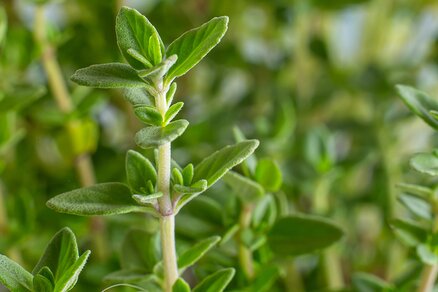
Common thyme
Garden thyme, culinary thyme, common thyme – LamiaceaeLearn more -
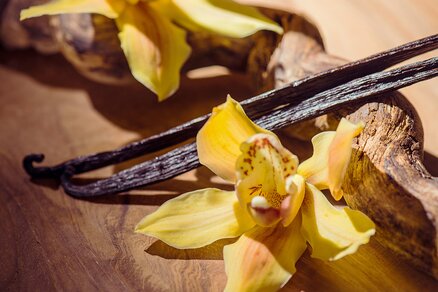
Real vanilla
Bourbon vanilla, Mexican vanilla, Tahitian vanilla (commonly available varieties) – orchid family (Orchidaceae)Learn more -
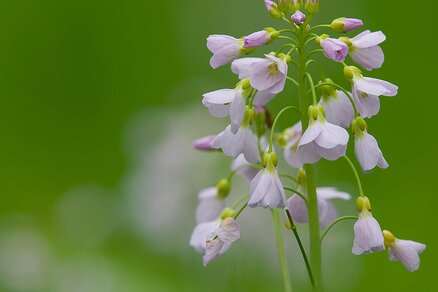
Meadow Cuckoo Flower
Bed-sicherli, cuckoo flower, meadow cress, wild cress, hunger flower – BrassicaceaeLearn more


