True meadowsweet
Filipendula ulmaria
Meadow goat’s beard, marsh goat’s beard, spirea, elm spirea, brook spirea – rose family (Rosaceae)


Content overview
Use in naturopathy
The flowers, leaves and roots of meadowsweet have long been used to treat a wide range of ailments. The herbalist priest Johann Künzle wrote: ‘In naturopathy, meadowsweet has long been known as a diuretic and diaphoretic; more recently, its special healing properties for all rheumatic conditions have also been discovered, with the result that meadowsweet is now regarded as one of the most distinguished Medicinal plants’ (Künzle, 1947, p. 497).
Meadowsweet is a popular remedy in naturopathy for headaches and migraines. It contains salicylic acid compounds that act in a similar way to the synthetically produced acetylsalicylic acid found in aspirin. The name ‘aspirin’ is even derived from the former Latin name for meadowsweet, ‘Spiraea ulmaria’. The plant is also considered to have pain-relieving, fever-reducing and anti-inflammatory properties and is therefore used to treat colds, flu and muscle and joint complaints. Meadowsweet is usually taken in the form of tea or tincture.
For external use, meadowsweet can be applied in the form of ointments or compresses to treat skin problems such as eczema, rashes and minor inflammation.
Caution
Pregnant women and people with a hypersensitivity to salicylates should use meadowsweet with caution. Furthermore, the plant contains a mildly toxic glycoside which can cause headaches at high doses. The salicylates it contains are suspected of having a blood-thinning effect. Therefore, meadowsweet should not be taken prior to surgical procedures.
- If you have any questions regarding its use, we recommend that you consult a naturopath or a qualified chemist.
Use in the kitchen
Meadowsweet blossoms are a popular ingredient in cooking and are used in a variety of ways due to their honey-almond-like flavour.
When steeped in liquids such as apple juice or milk, the delicate flowers release their flavour particularly well. To do this, place freshly picked meadowsweet blossoms in the drink for about 1 hour. Stir several times during this time, then squeeze out the blossoms and remove them at the end. Alcoholic drinks such as beer, mead and wine can also be wonderfully enhanced with meadowsweet in this way.
We also highly recommend making an aromatic syrup. It is ideal for sweetening a wide variety of drinks and also serves as a flavourful ingredient in desserts.
Meadowsweet is often used in French cuisine. In French, meadowsweet is called ‘Reine des prés’, which means ‘Queen of the Meadows’. There, the flowers are used to enhance yoghurt, ice cream, sorbets and fruit-based desserts.
The plant’s young, tender leaves are also suitable, in small quantities, for use in soups and vegetable dishes, or as a flavourful addition to smoothies or salad dressings.
Things to know
The plant belongs to the rose family and has creamy-white, fragrant flowers. It grows in damp meadows and along the banks of streams and rivers, and is native to large parts of Europe, North Asia and Central Asia. In Switzerland, meadowsweet grows at altitudes of up to 1,800 metres.
The origin of the name ‘meadowsweet’ remains unclear to this day.
In the past, people used the plant to sweeten mead, the ancient honey wine. The flowers gave the mead a delicate, sweetish flavour, which lent the drink a very special character – a ‘mead-sweet’ treat, so to speak.The English name ‘meadowsweet’ suggests that the plant is found in the wild in meadows – ‘meadow’ means ‘meadow’ and ‘sweet’ means ‘sweet’. After mowing, the plant gave off its characteristic, sweetish scent, which would explain the name ‘meadowsweet’.
Dry conditions make meadowsweet more susceptible to pests and diseases such as mildew. If you wish to grow meadowsweet in your garden, you should ensure that the soil remains sufficiently moist at all times to promote the plant’s growth and resilience.
Meadowsweet is a perennial – that is, a hardy, herbaceous plant that dies back above ground in winter and sprouts anew in spring. The plant grows to a height of 50 to 250 centimetres from a basal rosette of leaves. The leaves are arranged alternately on the stem and are pinnate. They usually have a reddish petiole, a terminal leaflet with three to five lobes, and small stipules on the petiole. The leaf margins are double-serrated to toothed.
Bibliography:
Künzle, J. (1947). The Great Herbal Medicine Book. Olten: Otto Walter AG.
About the authors

Dominik Imhof
Dominik Imhof, who grew up in Muotathal, discovered his passion for wild plants and mushrooms at an early age. Following a career as a handball player and training as an electrical engineer, he went on to deepen his knowledge of nutrition and health.
He completed training programmes to become a specialist adviser on self-sufficiency using edible wild plants and wild mushrooms at the University of Applied Sciences for Economics and the Environment (HfWU), as well as a TEN medicinal plant specialist. Today, he shares his expertise through field trips, workshops and group events.
On his website, you’ll find comprehensive information on wild plants, unusual products and much more.
Learn more
More medicinal plants
-
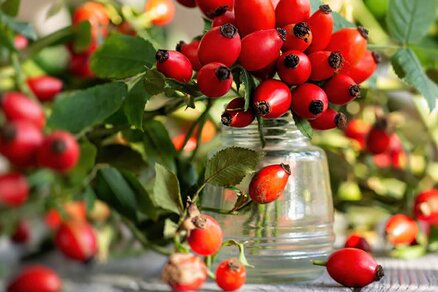
Rose hips
Wild rose, rose apple, Hägen – rose family (Rosaceae)Learn more -
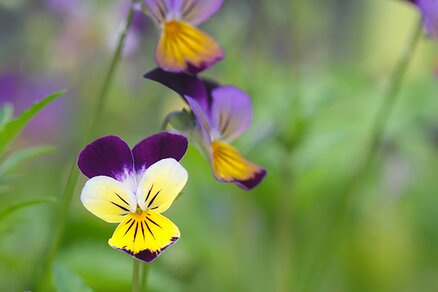
Wild pansy
Mother-of-God’s-shoe, field pansy – violet family (Violaceae)Learn more -

Narrow-leaved willowherb
Woodland willowherb, men’s herb, fireweed, rubble flower, women’s hair – evening primrose family (Onagraceae)Learn more


