Real vanilla
Vanilla planifolia
Bourbon vanilla, Mexican vanilla, Tahitian vanilla (commonly available varieties) – orchid family (Orchidaceae)

Content overview
History
Vanilla is a very ancient cultivated plant, originally from Central America. Even the Aztec rulers appreciated the delicate aroma of vanilla. According to legend, the ‘climbing vanilla plant is said to have sprung from the body of a slain Totonac princess’. Vanilla reached Europe in the 16th century after the Spanish conquistadors observed that the Aztec rulers were using it to flavour chocolate. Consequently, vanilla experienced its first heyday as the most expensive spice of its time.
From 1810 onwards, the first plant cuttings reached Europe’s botanical gardens, marking the beginning of vanilla cultivation outside its country of origin, Mexico.
Botany and Culture
True vanilla = Vanilla planifolia is the only spice from the orchid family. With its aerial roots, it is a true climber, capable of winding its way up into the crowns of tall trees. The large, pale green flowers open for just one day. The flowers are pollinated by a species of insect found only in Mexico.
Today, vanilla is mostly produced on plantations. Vanilla is propagated using cuttings. The plants are kept as low as possible by repeated pruning. This is necessary so that artificial pollination can be carried out more efficiently and productively from the plant’s third year onwards. Vanilla requires moderately humid air and sufficient rainfall. As this tropical plant thrives in warm conditions, it must be protected from strong winds.
For several centuries – right up until the 19th century – Mexico held a monopoly on exports, as the flowers could only be pollinated by a species of insect native to the region. Today, however, vanilla is also cultivated outside Mexico, including in Madagascar, Mauritius and Ceylon, although, as mentioned above, it must be pollinated artificially in these locations.
Vanilla flowers are only open for one morning, so the pollination window must be strictly adhered to. The capsule-like fruits, or pods, which grow up to 25 cm long, are fully mature after just one month. The pods are then processed in a labour-intensive and rather complex procedure, which is what gives them their dark brown, glossy colour. The vanilla spice is therefore the fermented and dried pod of the vanilla plant. Vanilla has an aromatic, delicate and very pleasant flavour, so it is hardly surprising that this spice has found a wide range of uses in the kitchen as a flavouring and aroma enhancer.
Use in naturopathy
Vanilla has never achieved the same significance in naturopathy as it has in cooking. According to ancient writings by the Spanish conquistadors from the 16th century, the indigenous peoples of Central America are said to have used vanilla to strengthen the body and mind. Vanilla is also said to have aphrodisiac properties.
The high-quality essences of real vanilla aid digestion. The dried pods are also used to colour medicines and in the perfume industry, as well as in incense sticks, candles and potpourri.
- If you have any questions regarding use, we recommend that you consult a naturopath or a qualified chemist.
Use in the kitchen
Real vanilla has a wide range of uses in the kitchen. It can be found in the following sweet dishes: pastries, milk- and quark-based desserts, bakes, tarts, sorbets and liqueurs.
Nowadays, the artificially produced vanilla flavouring, vanillin, is often used. High-quality – and consequently more expensive – vanilla pods are clearly recognisable by the crystals that form on their surface. As vanilla very quickly absorbs other odours and, consequently, other flavours, it must always be stored in an airtight container – which can also be filled with sugar if required. As a pleasant bonus, this results in sugar with a delicate vanilla flavour.
About the authors
Christian Fotsch
Christian Fotsch has been responsible for the content of the EGK-Health Insurance’s herbal newsletter since 2006. He is self-taught and has acquired extensive knowledge of herbs; together with his wife Ursula, he ran the ‘Silberdistel’ herb and medicinal plant nursery in Brienz (until 2010) and, until 2019, the well-known ‘Lindenhof’ herb hotel, in Brienz
More medicinal plants
-
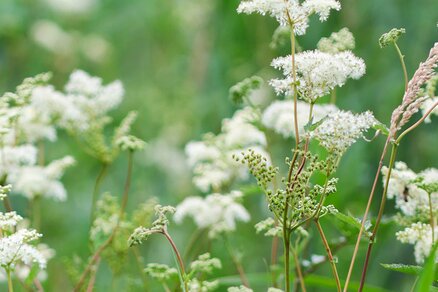
True meadowsweet
Meadow goat’s beard, marsh goat’s beard, spirea, elm spirea, brook spirea – rose family (Rosaceae)Learn more -
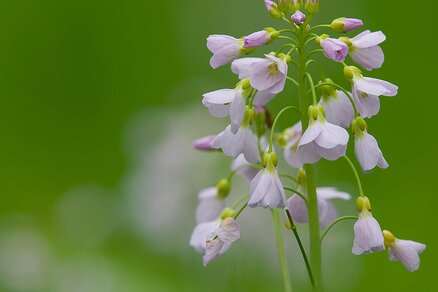
Meadow Cuckoo Flower
Bed-sicherli, cuckoo flower, meadow cress, wild cress, hunger flower – BrassicaceaeLearn more -
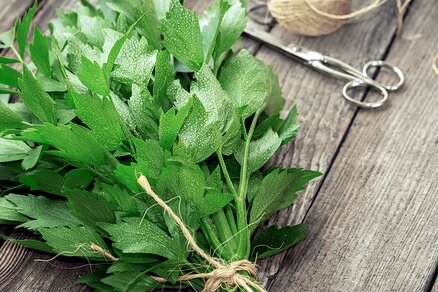
lovage
Lovage, soup herb, goutweed, rennet weed – Umbelliferae (Apiaceae)Learn more


