Common lady’s mantle
Alchemilla vulgaris
Lady’s mantle, Mary’s mantle, alchemist’s herb, women’s remedy, women’s solace, all-women’s remedy – Rosaceae (rose family)


Content overview
Use in naturopathy
Lady’s mantle is one of the best-known medicinal plants for women in naturopathy, but it can also offer benefits for men. The name ‘Alchemilla’ is derived from the word ‘alchemy’ and means ‘little alchemist’. Alchemists are said to have used the tiny droplets of water that form on its leaves in their elixirs. Lady’s mantle got its name because the leaves resemble the cloaks worn by the Virgin Mary in medieval depictions.
The phytohormones it contains are similar to the female sex hormone progesterone and can help regulate hormone balance. Lady’s mantle can be used in a wide variety of ways throughout the female cycle – from puberty through pregnancy to the menopause. It can have an antispasmodic effect on the uterus, promote milk production after childbirth, relieve abdominal pain such as menstrual cramps, or regulate blood flow. Lady’s mantle is often used in the form of tea or as a sitz bath for the lower abdomen.
In naturopathy, lady’s mantle is also used to treat headaches, diarrhoea or insomnia. When applied externally, lady’s mantle can help with skin problems such as ulcers or eczema, or aid wound healing.
Herbalist Johann Künzle wrote: “Furthermore, lady’s mantle is recommended for fever and burning sensations resulting from internal injuries, for inflammation of the airways, eyes and teeth, and for fractures, suppuration and ulcers in the lower abdomen” (Künzle, 1947, p. 395).
Caution
Drinking too much or too strong a brew of tea can cause nausea, and the plant may have a constipating effect.
- If you have any questions regarding use, we recommend that you consult a naturopath or a qualified chemist.
Use in the kitchen
Lady’s mantle may not be a traditional culinary herb, but its young, still rather pale leaves can be used in cooking from spring right through to summer. The flavour is slightly bitter and tangy, reminiscent of kohlrabi or cucumber. Finely chopped and used in small quantities, they are suitable for use raw as an ingredient in salads, salad dressings, smoothies, herb quark or herb butter.
If you wish to eat a larger quantity or mature leaves, it is advisable to cook them or mix them into a hot dish. The leaves contain a relatively high amount of tannins, which can leave a pelt-like sensation in the mouth. Cooking extracts the tannins whilst also softening the leaves. This makes them suitable for use in casseroles, patties, vegetable dishes, soups or fillings of any kind.
The young, yellow flowers and the inflorescences can be used as edible decoration or added, along with a few leaves, to a refreshing herbal lemonade.
Things to know
The water droplets found on the leaves in the morning are not just dew, but largely water that has been absorbed through the roots and excreted at night via openings at the edges of the leaves (so-called guttation droplets).
Lady’s mantle grows in sunny to semi-shaded locations on fresh to marshy meadows or embankments, as well as on cooler mountain meadows, and flowers from June to August.
The similar ‘silver lady’s mantle’ (Alchemilla alpina), also known as ‘Alpine lady’s mantle’, is generally used in naturopathy in much the same way as common lady’s mantle. Its leaves are silvery-hairy on the underside, which gives it its name, and it is more commonly found at higher altitudes.
Lady’s mantle grows to a height of up to 30 cm. The rounded, slightly hairy leaves are palmately lobed and have serrated margins. In the bud, the leaves are folded together like a fan. The flowers are only a few millimetres in size, yellowish-green in colour, arranged in panicles and have no petals.
Bibliography
Künzle, J. (1947). The Great Herbal Medicine Book. Olten: Otto Walter AG.
About the authors

Dominik Imhof
Dominik Imhof, who grew up in Muotathal, discovered his passion for wild plants and mushrooms at an early age. Following a career as a handball player and training as an electrical engineer, he went on to deepen his knowledge of nutrition and health.
He completed training programmes to become a specialist adviser on self-sufficiency using edible wild plants and wild mushrooms at the University of Applied Sciences for Economics and the Environment (HfWU), as well as a TEN medicinal plant specialist. Today, he shares his expertise through field trips, workshops and group events.
On his website, you’ll find comprehensive information on wild plants, unusual products and much more.
Learn more
More medicinal plants
-
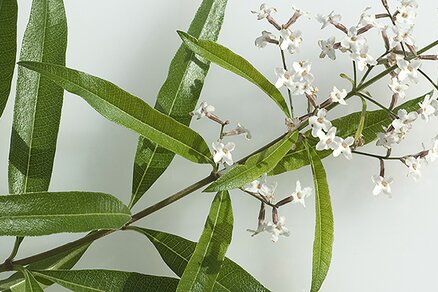
Lemon bush
Verveine, lemon verbena, fragrant verbena, citronella, South American verbena – verbena family (Verbenaceae/Lippia citriodora)Learn more -
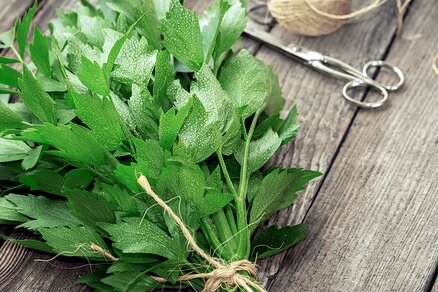
lovage
Lovage, soup herb, goutweed, rennet weed – Umbelliferae (Apiaceae)Learn more -
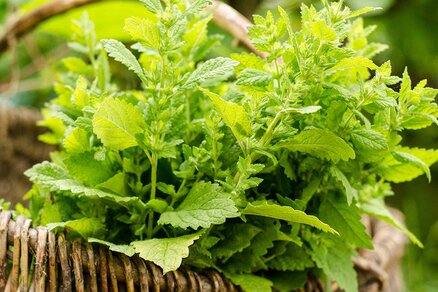
Lemon balm
Lady’s bane, heart’s comfort, heart’s delight – LamiaceaeLearn more


