
Content overview
History
It is not possible to say with certainty where the German name ‘Waldmeister’ comes from. The literal description ‘a wild plant originating from the forest, with masterful healing powers’ is rather unlikely.
Be that as it may, woodruff has been a prized medicinal, aromatic and culinary plant since the early Middle Ages. The ‘Waldmännchen-Kraut’ (forest sprite herb), as woodruff is also known in folk nomenclature, possesses a wide range of powers that are reflected in beliefs and superstitions.
In superstition, the ‘May herb’ was used against all manner of ‘demonic and evil forces’. It is even said that witches can be driven away by a mixture of woodruff, St John’s wort, pennyroyal and stinging nettle.
Botany and Culture
Whether in Europe, North Africa or Russia, this plant – which belongs to the genus of bedstraw (Galium) – can be found almost everywhere. The perennial woodruff thrives particularly well in mixed deciduous forests, but also in sparse coniferous forests on nutrient-rich soils up to altitudes of around 1,400 metres above sea level.
This herbaceous plant reaches heights of 15 to 25 cm.
The plant is easy to propagate by dividing the creeping, reddish-brown rhizomes. The small, white flower umbels are very decorative and add lovely splashes of colour to humus-rich forest floors.
The fresh, succulent green leaves of woodruff are harvested from late April to early June. To do this, pick the top three to four layers of leaves from plants that have not yet flowered. If the plant is already in flower, do not use too many flowers. As woodruff only releases coumarin – the sweet-smelling active ingredient that has a scent reminiscent of fresh hay – after wilting, the herb should be harvested a few hours before use.
Coumarin is a plant compound with a pleasantly spicy scent.
Use in naturopathy
The health-promoting properties of woodruff are described in the literature as follows: diuretic, calming, supportive of liver function and helpful for insomnia. The dried herb of woodruff, when mixed with other herbs such as lavender and lemon balm, is suitable, for example, as a filling for a gentle sleep pillow.
When infused with wine, this little plant is said to ‘lift the spirits’.
When used externally, fresh leaves crushed in the hand and applied to insect bites can provide relief. Crushed fresh leaves help the blood to clot quickly in cuts
If dried leaves are placed under carpets or amongst laundry, woodruff repels moths and other unwanted insects.
High doses of coumarin can cause nausea, dizziness and drowsiness. Therefore, a certain degree of caution is advised when using woodruff. As a rule of thumb, no more than three grams of fresh herb should be used per litre of liquid.
- If you have any questions regarding use, we recommend that you consult a naturopath or a qualified chemist.
Use in the kitchen
May herb is added to May punch, tea, spirits and other herbal drinks to enhance the flavour. However, we would like to point out once again at this point that coumarin can cause headaches if consumed in excess. As mentioned previously, for a May punch we need a maximum of 3 grams of fresh herb per litre of liquid.
Desserts made with milk, puddings, jelly, ice cream or even custards can be delicately flavoured with young, dried woodruff shoots.
It is less well known that this delicate herb, which smells of fresh hay, can also be used as a seasoning in more unusual vegetable dishes.
Flower stems tied into garlands can bring great joy as delicately scented table decorations.
About the authors
Christian Fotsch
Christian Fotsch has been responsible for the content of the EGK-Health Insurance’s herbal newsletter since 2006. He is self-taught and has acquired extensive knowledge of herbs; together with his wife Ursula, he ran the ‘Silberdistel’ herb and medicinal plant nursery in Brienz (until 2010) and, until 2019, the well-known ‘Lindenhof’ herb hotel, in Brienz
More medicinal plants
-
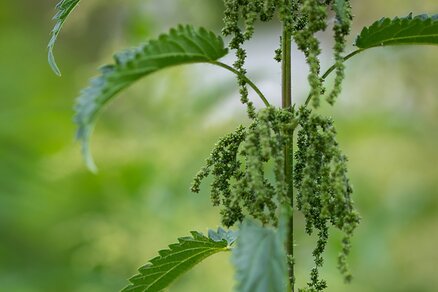
Stinging nettle
Stinging nettle, hairy nettle, sharp nettle, thunder nettle, hemp nettle, nettle herb – nettle family (Urticaceae)Learn more -
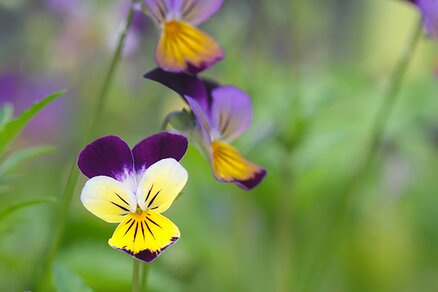
Wild pansy
Mother-of-God’s-shoe, field pansy – violet family (Violaceae)Learn more -
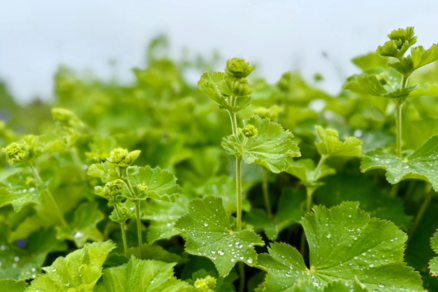
Common lady’s mantle
Lady’s mantle, Mary’s mantle, alchemist’s herb, women’s remedy, women’s solace, all-women’s remedy – Rosaceae (rose family)Learn more


