

Content overview
Use in naturopathy
Meadow sage can be used in a similar way to common sage (Salvia officinalis). However, according to many authors, it is less effective and is therefore rarely used in modern naturopathy. The book *Die Kräuter in meinem Garten* states: ‘If garden sage is not available, meadow sage is a substitute – albeit not an equivalent one – as it contains significantly fewer of the medicinal constituents’ (Hirsch & Grünberger, 2021, p. 587).
Meadow sage also contains fewer essential oils than common sage. Anyone who finds the taste of common sage too strong can opt for meadow sage instead. The leaves are used for the following applications, and they are preferably harvested shortly before flowering.
Like common sage, meadow sage can be used to treat inflammation of the mouth and throat, as well as for coughs and sore throats. It is also said to have digestive and antispasmodic properties, which are used, amongst other things, to treat gastrointestinal complaints and digestive problems.
When used externally, meadow sage can help with skin conditions such as rashes, redness and insect bites. It can also have an antiperspirant effect and is therefore used to treat night sweats or hot flushes.
Caution:
Meadow sage, like common sage, should not be taken in high doses over a prolonged period. Breastfeeding and pregnant women should not consume sage, as it can inhibit milk production and may induce labour.
-
If you have any questions regarding its use, we recommend that you consult a naturopath or a qualified chemist.
Use in the kitchen
The leaves and flowers of meadow sage can be harvested from around April to August. The young, tender leaves can be used fresh, although they are less intense in flavour than common sage. Nevertheless, they can be used, for example, as a mild seasoning to enhance spreads, herb salts, vinegar, oils, teas or Mediterranean dishes. They are also ideal for making crispy crisps or ‘sage muesli’, where the leaves are dipped in a light beer batter and deep-fried. They can also be added to salads, prepared like spinach, used in fillings, incorporated into herb soups and pasta dishes, or finely chopped and added to crispy rösti just before they’re done to give the dish a fresh touch.
Whether fresh or dried, the flowers make a wonderful decoration for drinks, desserts, cakes or creams. The syrup made from the flowers takes on a striking pink colour. However, this requires an acid, such as lemon or lime juice, to bring out the beautiful colour.
Things to know
Meadow sage prefers calcareous, dry to nutrient-poor soils in sunny locations and is therefore found in nutrient-poor meadows or along the edges of paths. It also often grows in villages and towns in green spaces, along roadsides or in flower beds. It is mainly found in Central Europe and the Caucasus region. It was introduced to North America by humans.
Meadow sage is now rarely found in meadows, as the meadows are mown before its seeds ripen (July to August), which prevents it from reproducing. Furthermore, heavy fertilisation or nutrient inputs displace its preferred, nutrient-poor habitats, allowing highly competitive grasses to take over. Meadow sage should therefore – if at all – only be collected in small quantities and in consultation with the landowner.
The genus name of meadow sage, ‘Salvia’, is derived from the Latin word ‘salvare’ and means ‘to heal’. The species name ‘pratensis’ comes from the Latin word ‘pratum’, which means ‘meadow’. Thus, ‘pratensis’ means ‘growing in meadows’.
Meadow sage has developed a clever lever mechanism for pollination. When a bumblebee inserts its proboscis into the flower, this mechanism is triggered and the pollen is transferred to its hairy body. In this way, the pollen is carried by the bumblebee to the next flowers.
Meadow sage grows to a height of between 30 and 60 cm. The leaves are basal and have a typically wrinkled surface, like common sage. Scattered pairs of leaves grow up the stem; they are arranged in a cross-opposite pattern and become smaller towards the top. The stem is quadrangular and sparsely hairy. The flowers of meadow sage are usually dark blue-violet in colour.
Bibliography:
Hirsch, S., Grünberger, F. (2021). The Herbs in My Garden. Engerwitzdorf/Mittertreffling: Freya Verlag.
About the authors

Dominik Imhof
Dominik Imhof, who grew up in Muotathal, discovered his passion for wild plants and mushrooms at an early age. Following a career as a handball player and training as an electrical engineer, he went on to deepen his knowledge of nutrition and health.
He completed training programmes to become a specialist adviser on self-sufficiency using edible wild plants and wild mushrooms at the University of Applied Sciences for Economics and the Environment (HfWU), as well as a TEN medicinal plant specialist. Today, he shares his expertise through field trips, workshops and group events.
On his website, you’ll find comprehensive information on wild plants, unusual products and much more.
Learn more
More medicinal plants
-
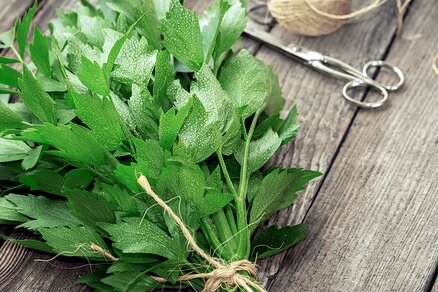
lovage
Lovage, soup herb, goutweed, rennet weed – Umbelliferae (Apiaceae)Learn more -
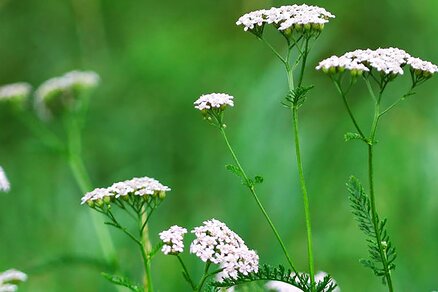
Common yarrow
Lady’s bower, Venus’s eyebrow, stomach-soothing herb, blood-stopping herb, ground-heal, Achilles’ herb, milfoil – AsteraceaeLearn more -
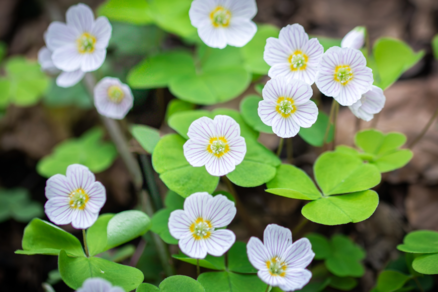
Wood sorrel
Common wood sorrel, cuckoo’s meat, weathercock, hare’s sorrel, sureli, sour gugger, Lord’s soup, gugger bread – wood sorrels (oxalidaceae)Learn more


