Horseradish
Armoracia rusticana
Horseradish, pepper root, country mustard, kren, Moravian radish – Brassicaceae

Content overview
History
Horseradish has been known for over 2,000 years as a highly prized medicinal plant. In ancient Pompeii, a mural depicting this robust and striking plant can still be admired today.
There are various explanations for the origin of the name. One suggests that the name ‘Meerrettich’ (horseradish) may be derived from its origin as ‘the radish that came to us across the sea’.
Another explanation suggests that the actual meaning of the word probably simply refers to a larger radish. The word ‘Meer’ is therefore used more in the sense of ‘large’ and ‘strong’.
A further plausible interpretation derives the word ‘Meer’ from ‘Mähr’ (old horse). The extremely effective and invigorating ‘Mähr’ radish not only helped old horses regain their vigour.
Used primarily as a medicinal plant over the centuries, its culinary value was only discovered by the Germans and Danes towards the end of the 16th century. They began to cultivate the radish—known in the local language as Kren—on an increasing scale. The root was used primarily for preparing fish sauces. There are many growing regions, particularly in France and also in the USA. In these regions, the so-called ‘horseradish women’ set out in autumn to dig up the roots and sell them.
Botany and Culture
Horseradish, a perennial and hardy plant native to southern and eastern Europe, belongs to the cruciferous family. Its perennial root is very long, multi-headed and cylindrical to turnip-shaped. In spring, it first produces large, unevenly serrated leaves, 50 to 70 cm long. Later, a flower stalk grows from the centre, reaching a height of up to one metre. The plant flowers from late May through to July. The white flowers are arranged in a panicle. The flowers develop into silique-like fruits.
In the garden, horseradish grows easily in well-drained, humus-rich soil in a sunny to semi-shaded position. When planted near potatoes, it strengthens them and makes them more resistant to disease. Horseradish also deters the Colorado potato beetle.
In the home garden, the plant is best propagated by dividing the clumps or roots.
Horseradish can be harvested from September right through to February. During this period, the plant has gone dormant and its energy is stored in the root. To keep the dug-up roots fresh for as long as possible, cover them with soil or sand in a frost-free, dark cellar.
Use in naturopathy
The main active ingredient in horseradish root is the potent and pungent mustard oils. When the root is grated, these oils are released and can stimulate the tear glands – much like when chopping onions. Mustard oils are very beneficial to our health, as they are able to combat harmful bacteria in our bodies. This is why horseradish is also known as ‘penicillin from the garden’. Mustard oils help to speed up the breakdown and elimination of harmful substances from our bodies. Consuming horseradish can therefore help us recover more quickly from colds and feverish flu-like illnesses.
In addition to mustard oils, vitamin C, potassium salts and sulphur compounds, horseradish contains many other active ingredients. These support the healing process in cases of urinary tract infections, as well as headaches, toothache, a sore throat and even earache. Horseradish also exerts its healing properties in cases of stomach and intestinal complaints.
- If you have any questions regarding use, we recommend that you consult a naturopath or a qualified chemist.
Use in the kitchen
Freshly grated horseradish root is a popular condiment for various fish and meat dishes. A sauce enriched and enhanced with this aromatic root goes particularly well with smoked fish or roast beef. Horseradish also goes down a treat as an accompaniment to rich sausage and meat dishes. It is highly prized as an accompaniment to cheese dishes (e.g. raclette) or as a horseradish mayonnaise sauce.
Dishes and sauces containing horseradish should only be gently warmed, as the root quickly loses its flavour when heated.
In early spring, the young, mildly aromatic leaves can also be harvested. They make a healthy, varied and tasty addition to salads.
About the authors
Christian Fotsch
Christian Fotsch has been responsible for the content of the EGK-Health Insurance’s herbal newsletter since 2006. He is self-taught and has acquired extensive knowledge of herbs; together with his wife Ursula, he ran the ‘Silberdistel’ herb and medicinal plant nursery in Brienz (until 2010) and, until 2019, the well-known ‘Lindenhof’ herb hotel, in Brienz
More medicinal plants
-
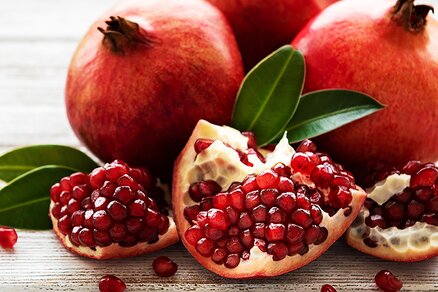
Pomegranate tree
Paradise apple, seeded apple, Aphrodite’s apple – Lythraceae/Lunicaceae familyLearn more -
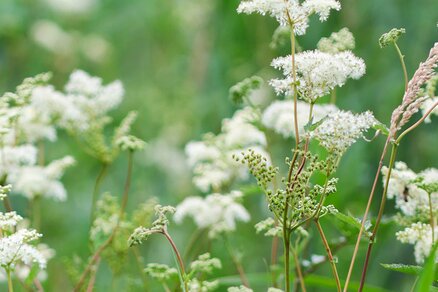
True meadowsweet
Meadow goat’s beard, marsh goat’s beard, spirea, elm spirea, brook spirea – rose family (Rosaceae)Learn more -
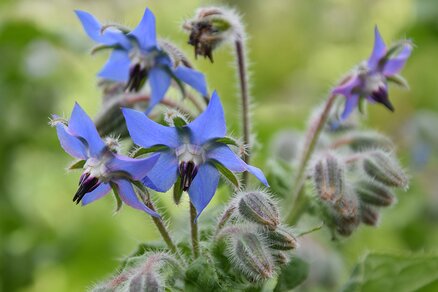
Borage
Borage, heart’s delight, love-at-first-sight, cheer-up herb – Boraginaceae familyLearn more


