Sand thyme/wild thyme
Thymus serpyllum
Wild thyme, Roman thyme, Chölm, Muttenchölm – Lamiaceae

Content overview
History
‘A tangy, fresh herb with a summery scent for the brave and those who aspire to be so’. The valiant warriors of ancient Rome bathed in waters infused with Roman thyme to fortify themselves and ensure they did not lose their courage in battle. The botanical term ‘thymus’ derives from the Greek word ‘thymon’ and means courage, strength and fearlessness.
This well-known culinary, medicinal and incense herb originally hails from the eastern Mediterranean region. Wild thyme has been growing there for over 3,000 years on dry, rocky and sandy soils. The Benedictine monks brought the aromatic herb to the north around 800 AD, and from then on it was cultivated in monastery gardens. This hardy and versatile herb soon found its way into cottage gardens and gradually spread throughout Europe.
Botany and Culture
Wild thyme is a mat-forming plant that grows to a height of up to 20 centimetres, depending on its location. It belongs to the large family of Lamiaceae. Its square, upright stems are short and covered in whitish hairs. The small leaves, 4 to 10 millimetres long, light to dark green in colour, elliptical to oblong in shape and short-stalked, are covered in grey, felt-like hairs on the underside and smooth on the upper side. They are slightly curled at the edges. The whole plant has an aromatic scent and flowers from June to September. The pretty lip-shaped flowers range in colour from lilac to dark pink and are a popular source of nectar for bees.
There are various types and varieties of wild field thyme, all of which have similar requirements in terms of location and care. Wild thyme, for example, prefers a sunny spot with light, well-drained soil so that it can thrive to the full. In spring, you can give the plant a small amount of compost or organic all-purpose fertiliser, and again in autumn, so that the perennial can build up sufficient strength for the winter. Wild thyme is hardy. If harvested regularly, pruning is not necessary. Otherwise, it is advisable to cut the perennial back by about a third in autumn. When doing so, care must be taken not to cut too far into the old wood.
Wild thyme is propagated by cuttings or by dividing older clumps. The plant belongs in every herb garden. It also has a permanent place in a rockery. It thrives near stones that radiate heat and, with its profusion of flowers, is a decorative feature both in the garden and in a herb pot. ‘Muttenchölm’, as the plant is also known colloquially, grows very well alongside other Mediterranean herbs such as sage, rosemary and lavender.
Use in naturopathy
In European folk medicine, wild thyme became highly regarded for treating respiratory ailments and for strengthening the body. Even the druid Miraculix in the stories of Asterix and Obelix valued the power and efficacy of wild thyme, which kills bacteria and viruses, and used it accordingly. Roman wild thyme was also praised for its use in treating gastrointestinal disorders, for relieving gout and rheumatic complaints, as well as for coughs and sore throats.
- If you have any questions about how to use this product, we recommend that you consult a naturopath or a qualified chemist.
Use in the kitchen
In the kitchen, wild thyme can be used as an aromatic herb in a wide variety of dishes. Thanks to its preservative properties, it is also ideal for methods of preparation used to preserve food. Another advantage is that it can be harvested almost all year round, as it is (almost) evergreen. It is mainly the leaves that are used; these can be used fresh or dried in an airy, shady place for tea, oil infusions, salad dressings, marinades and vinegar.
It is also well worth picking the flowers and using them in the kitchen or in tea blends as pretty splashes of colour and eye-catching accents. For example, they add a special touch to herb butter, give herbal tea blends a lovely colour and, when scattered over a salad, delight our senses and allow us to truly savour a fine meal.
About the authors
Christian Fotsch
Christian Fotsch has been responsible for the content of the EGK-Health Insurance’s herbal newsletter since 2006. He is self-taught and has acquired extensive knowledge of herbs; together with his wife Ursula, he ran the ‘Silberdistel’ herb and medicinal plant nursery in Brienz (until 2010) and, until 2019, the well-known ‘Lindenhof’ herb hotel, in Brienz
More medicinal plants
-
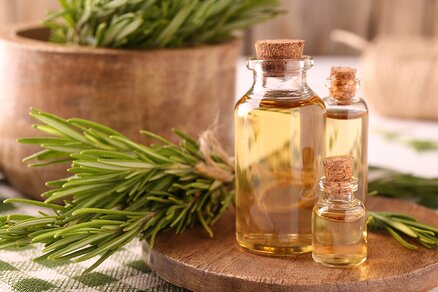
Rosemary
Bride’s herb, wedding herb, sea dew, rosemary herb – LamiaceaeLearn more -
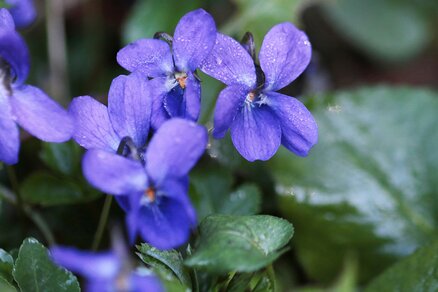
Fragrant violet
Sweet violets, March violets, violets, Easter violets – the violet family (Violaceae)Learn more -
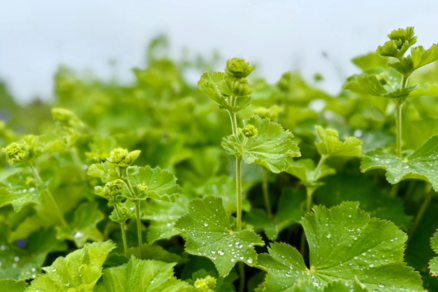
Common lady’s mantle
Lady’s mantle, Mary’s mantle, alchemist’s herb, women’s remedy, women’s solace, all-women’s remedy – Rosaceae (rose family)Learn more


