Common chickweed
Stellaria media
Bird’s-eye, Bird’s-eye Speedwell, Chicken’s Intestine, Cough Intestine – Carnation family (Caryophyllaceae)


Content overview
Use in naturopathy
Chickweed is a widespread plant that grows in large colonies and, in many places, can even be gathered in winter and used to promote our wellbeing.
It has been highly valued by numerous herbalists for centuries. Sebastian Kneipp, for example, recommended chickweed for lung ailments, and Johann Künzle wrote: ‘A salad made from chickweed is particularly recommended for people with weak hearts. Compresses made from fresh chickweed are beneficial for pneumonia’ (Künzle, 1947, p. 481).
When taken internally, chickweed can have a cleansing and invigorating effect on the body. This cleansing effect can have a positive impact on the blood, kidneys and bladder, and may provide relief for skin conditions such as psoriasis and eczema. Chickweed contains, amongst other things, saponins, which can have expectorant and mucolytic properties. In naturopathy, chickweed is therefore used, amongst other things, to treat productive coughs or asthma. To do this, the herb is chewed and swallowed or prepared as a tea.
When applied externally, chickweed can have a cooling, pain-relieving and anti-inflammatory effect. The fresh, crushed herb or a tea made from it can be used as a poultice to help with slow-healing wounds, minor injuries, burns, grazes and rashes. If you wish to use the plant as a tea, you should allow it to cool before use.
- If you have any questions about how to use this product, we recommend that you consult a naturopath or a qualified chemist.
Use in the kitchen
Chickweed is a real powerhouse and contains about twice as much calcium, three times as much magnesium and seven times as much iron as lettuce. Just 50 g of the herb covers an adult’s daily requirement of vitamin C. Fresh chickweed or freshly squeezed chickweed juice can therefore help to compensate for any winter deficiency in minerals and vitamins. Chickweed is available all year round and the fresh, above-ground parts are harvested. Due to its abundance, it is usually possible to gather a sufficient quantity of the plant efficiently.
The plant has a mild flavour, reminiscent of raw sweetcorn. It is particularly well suited as a raw snack, for spreads or as an addition to salads. Its mild flavour also makes it popular with children, and it is excellent in green smoothies. When cooked, it can be used to great effect as a tender wild vegetable in pestos, soups, stews, rice and vegetable dishes, or bakes.
Warning:
Chickweed should not be eaten in large quantities, as the saponins it contains can irritate the stomach.
Things to know
Chickweed is found worldwide in its preferred habitats. It is often found in gardens, on fields, along water’s edges, by paths and even in pots.
Due to its vigorous and early seed production, it is often referred to as a troublesome ‘weed’. Chickweed is also hermaphroditic and capable of self-pollinating, which is often the case and contributes to the plant’s rapid proliferation. Each plant can produce up to 15,000 seeds, which remain viable for up to 30 years. New plants can even emerge from these seeds in winter.
Chickweed grows to heights of between 10 and 40 cm and often forms green carpets on the ground. The leaves are arranged oppositely, are ovate, entire and pointed. The stem is round, has a fine line of hairs on one side and a white vein running through the centre. The five white petals are split almost to the base, giving the appearance of ten petals. The sepals are hairy, and purple anthers protrude from the flower.
The fine line of hairs on the stem is an important identifying feature and also serves a functional purpose. Dewdrops can run along this line of fine hairs to the root, supplying the plant with vital water.
The seeds are a favourite food for birds and chickens in winter, and the vein inside the stem resembles an intestine. These observations explain the two names ‘chicken gut’ and ‘chickweed’.
Bibliography:
Künzle, J. (1947). The Great Herbal Remedies Book. Olten: Otto Walter AG.
About the authors

Dominik Imhof
Dominik Imhof, who grew up in Muotathal, discovered his passion for wild plants and mushrooms at an early age. Following a career as a handball player and training as an electrical engineer, he went on to deepen his knowledge of nutrition and health.
He completed training programmes to become a specialist adviser on self-sufficiency using edible wild plants and wild mushrooms at the University of Applied Sciences for Economics and the Environment (HfWU), as well as a TEN medicinal plant specialist. Today, he shares his expertise through field trips, workshops and group events.
On his website, you’ll find comprehensive information on wild plants, unusual products and much more.
Learn more
More medicinal plants
-
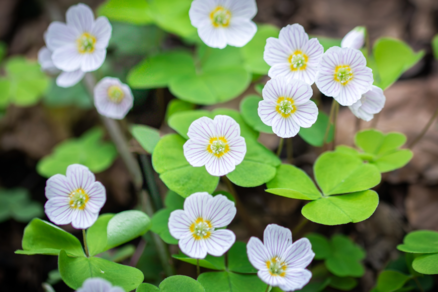
Wood sorrel
Common wood sorrel, cuckoo’s meat, weathercock, hare’s sorrel, sureli, sour gugger, Lord’s soup, gugger bread – wood sorrels (oxalidaceae)Learn more -
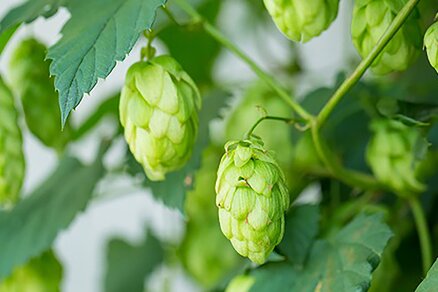
Real hops
Fence hop, willow hop, hop – Cannabaceae familyLearn more -
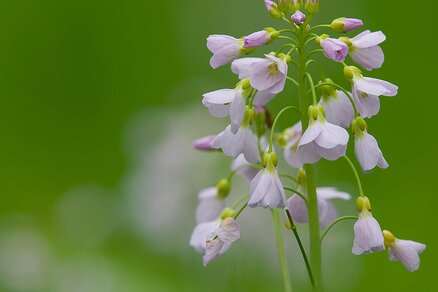
Meadow Cuckoo Flower
Bed-sicherli, cuckoo flower, meadow cress, wild cress, hunger flower – BrassicaceaeLearn more


